Why Bees Smell Like Lemon

IMG_2700

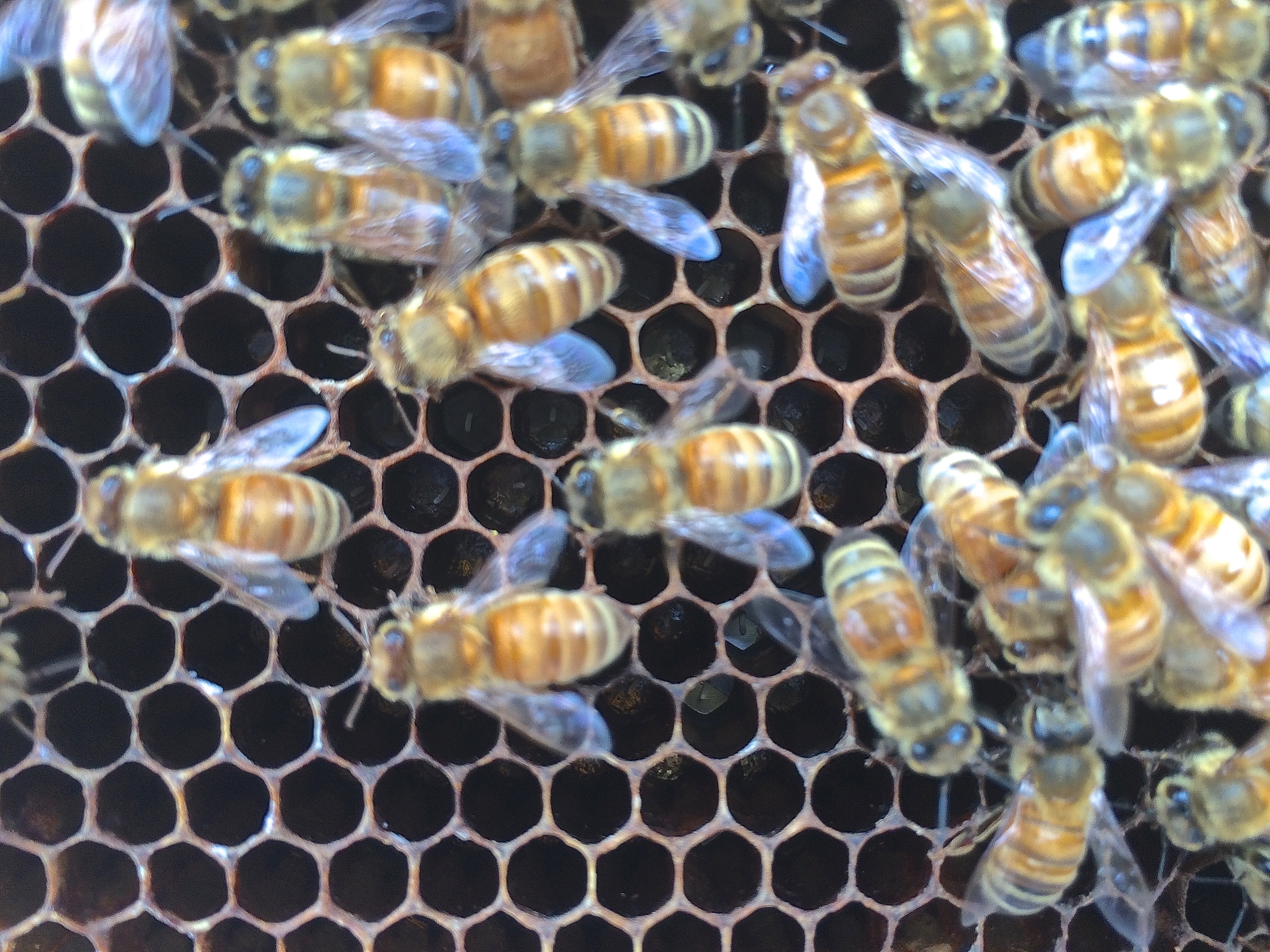
Being that this is Easter season, I went on an egg hunt of sorts today, checking to see if my new queen bee is laying eggs. Huzzah! Look in the cells between the four bees on the left-hand side of this photo. You might need to click on the photo to enlarge it. See some small white pins that look like rice? Bee eggs! Proof Her Majesty is going to work, laying up to 1,500 eggs a day.

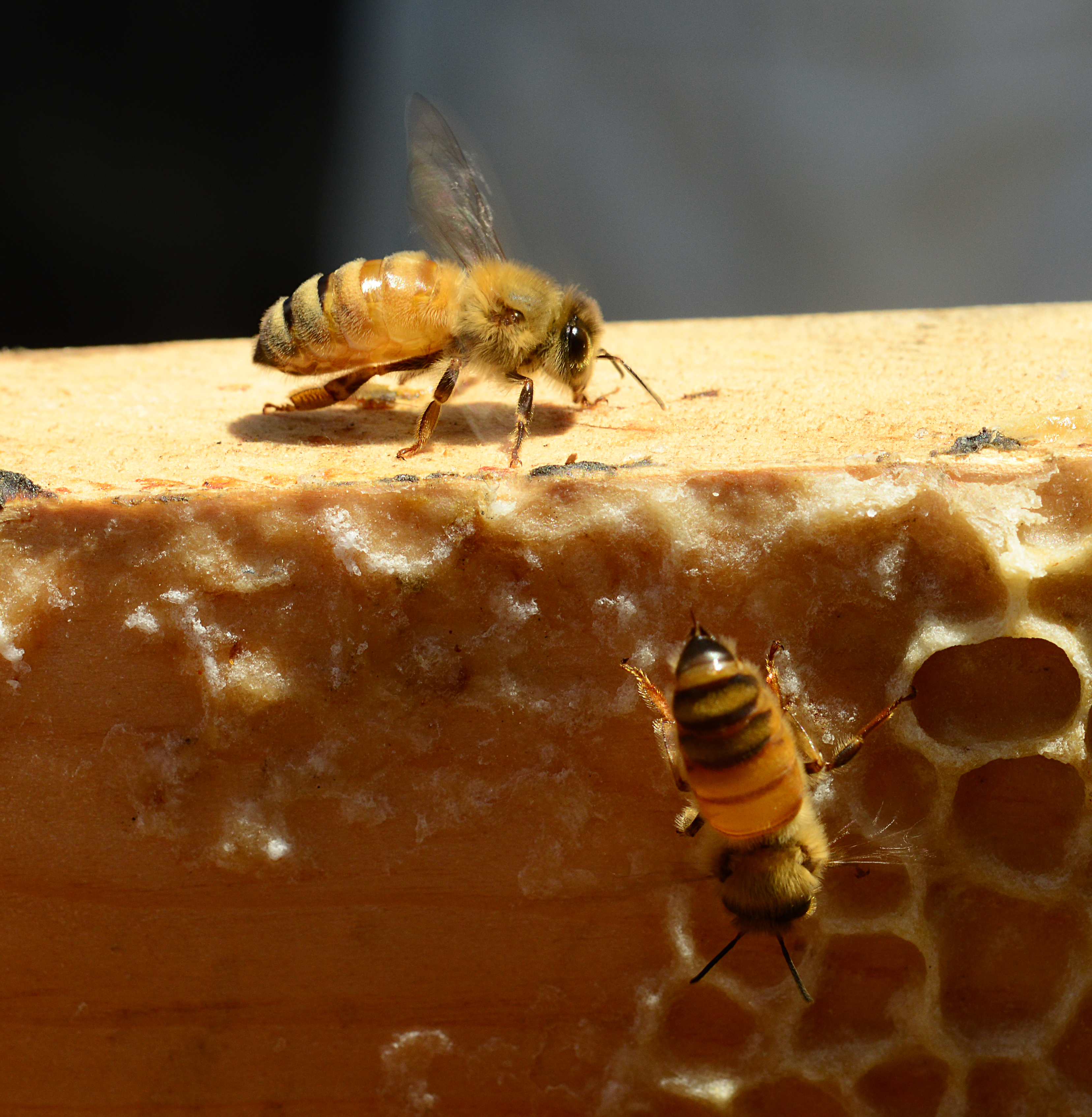
When I closed the hives, I spotted a handful of bees fanning their wings madly at the entrance. Bees can flap their wings more than 200 times per SECOND. Watch it on slo-mo video, where you can see the bees bend the tips of their abdomens to expose their Nasanov glands. The gland releases a lemon-scented attraction pheromone that helps foraging bees smell their way home. Think of it as sprinkling lemongrass on your doorstep to ensure that your family members remember which house is theirs.

Now if you smell bananas, you’ve got an entirely different problem. More on that in a later post …

Springing the Queen

queenbee

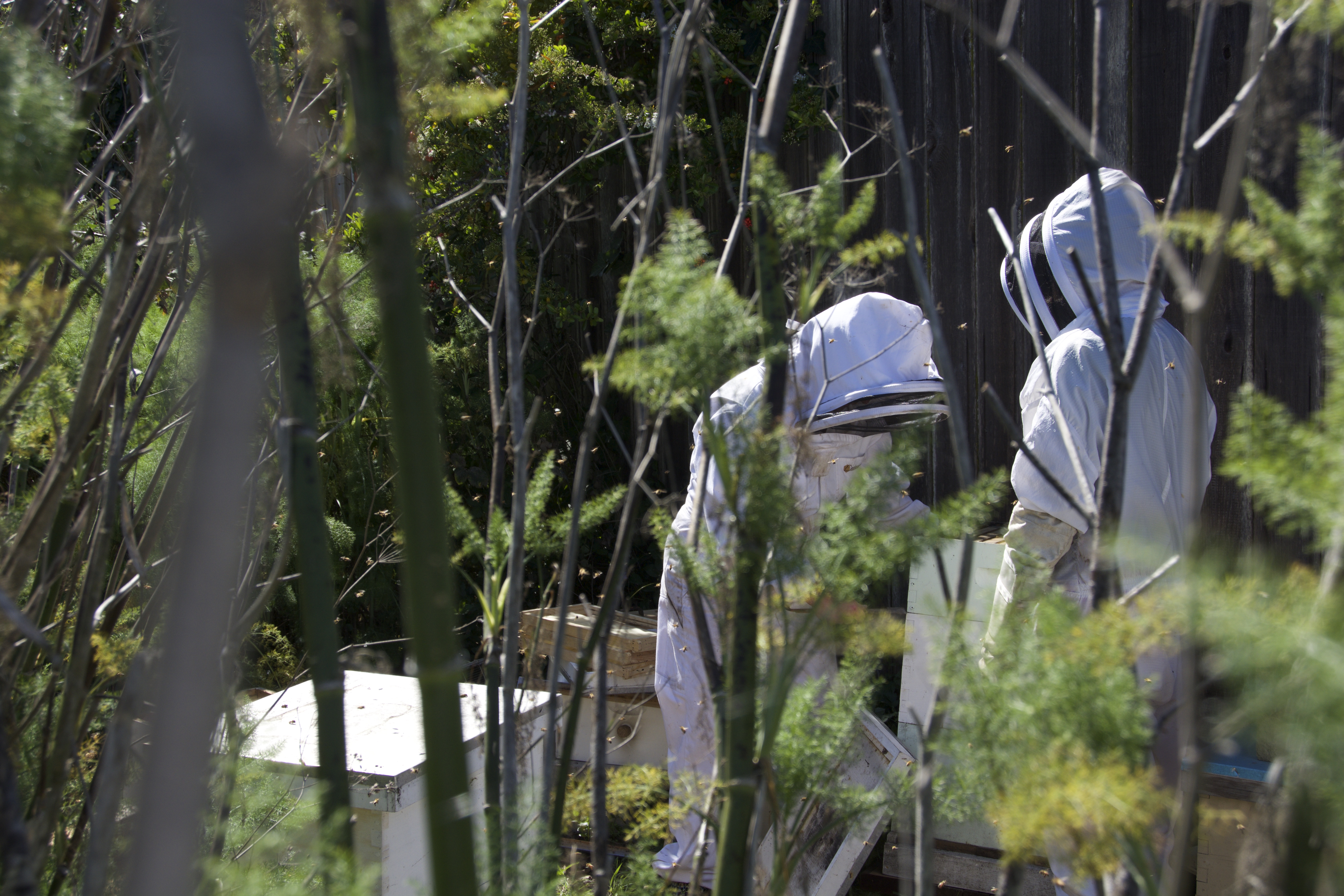
It’s been three days since we installed four new beehives at Little City Gardens in San Francisco – enough time for each colony to start foraging in the tall fennel and blackberry vines and become accustomed to the scent of their new Queen. So we returned to the bee yard to release the Majesties from their confines. Rather than jabbing the cork plug of her cage and pulling to release her, which might unintentionally injure her, we pried open the staple and screen from the side of her cage and let her amble out. Here’s a video of the process; listen closely and toward the end you can hear the Queen “pipe” — make a squeak to announce her arrival. It’s like a bee version of, “Yo!”

DSC_7984

I prefer “controlled release” because you know for sure the queen is healthy and the bees like her before she’s let go. Putting a sugar plug or marshmallow plug in her cage isn’t as secure, because if you show up to an empty cage after the bees chew through the sugar, you’re never certain if they ate through it too fast and killed her, or if she died in the cage and the bees flew off with her to dispose of her far from the hive. You’ll discover it eventually when no eggs appear, but by then you’ve lost precious time to correct the situation.

Next up: We return in five days to look for eggs in the honeycomb. To know The Lady Doth Bear Fruit.

IMG_0762

20,000 Bees In The Back Seat

IMG_2556IMG_2559

What does it sound like to drive with 20,000 bees in the backseat? Like you’ve got boiling water back there, or a pan of sizzling oil. Every once in a while a straggler bee on the outside of one of the mesh/wood cages would fly loose in the cabin, then make its way out the window. Other than that, the drive from Healdsburg to San Francisco was sting-free as we transported four packages of spring bees to their new hives in a Mission District urban farm.

We shook the bees into hives of drawn-out honeycomb, suspended the queen in her individual cage between two frames, fed them lots of 1:1 sugar water and closed the hives. We’ll be back on Wednesday to hand-release the queen. By then, the colonies should have acclimated to her pheromone and will accept, rather than murder, her. I decided against swapping the cork in her cage for a marshmallow, because the bees were so hungry when I got them that I worried they would eat through the marshmallow in minutes. Colonies need at least two to three days to get used to their new queen.

Here’s a photo gallery of our trip, and a slow-motion video showing how to shake bees into a new hive. Images and video by Jenn Jackson.

This slideshow requires JavaScript.

Stringing Beehive Frames, Grandpa-Style

IMG_0063 IMG_0064

On a recent visit to Grandpa’s house in Carmel Valley, he gave me his handmade frame stringer. Before laying wax foundation into empty beehive frames, you must strengthen them first by putting horizontal wiring inside the wooden frames.

FullSizeRender 6

This helps steady the wax sheets so the bees can make orderly honeycomb from it, and wires also keep the honeycomb from falling apart in the spinner at harvest time. I wasn’t sure how his gizmo worked, but I think I got it. I was able to string frames so tightly that I could play them like guitar strings. Watch and tell me if I did it correctly. 

BEE-Mail

IMG_2431

Finally, the long awaited e-mail came. On my birthday. My two new colonies of bees will be waiting for me in Healdsburg on March 29. I’ve been without bees since last fall, when both my queens began weakening, and I tried to save the hives by combining them into one stronger hive with one queen. But instead of joining forces, the two colonies dueled to the death. It was a horrible end to a rough season, and being without bees this long feels like losing a dog. I miss seeing them dart in the air, miss checking for eggs, miss feeling their vibration when I lift out a frame. I’ve been watching the flowers pop out early this year, and trying to remain patient for my order of two new colonies and two new mated queens to be filled. When I got the good news, the first thing I did was go grocery shopping for them.

FullSizeRender 5

They will need sugar water in a 1:1 ratio while they scout around their new home, Little City Gardens in the outer Mission of San Francisco. And the marshmallows? The queen will come in her own individual cage that is corked in one end. I will replace the cork with a marshmallow, and dangle her between the frames. By the time the bees chew through the marshmallow to release her, they will have acclimated to her scent, and therefore not kill her. Bonus.

queen cage

If you are looking for bees too, I ordered survivor stock from April Lance.