Bee Lesson Number One

propolislowres_8125

In the weeks since my grandfather died, I’ve been thinking a lot about what he and his bees taught me about life. A hive is a social community with rules of behavior and cooperation and love, which becomes more visible the longer you share your life with bees.

Everything I know about being a good person comes from Grandpa Frank Peace and his bees. For the next five Mondays, I will share a bee lesson, to get the week off to a good start.

LESSON ONE – Family First

 The hive is a matriarchy, with a queen mother and tens of thousands of daughters. They can’t exist apart, because the queen is the only bee in the hive that lays eggs, yet the queen can not feed herself and stay warm if not for the comfort and care of her daughters, who bring her nectar and water droplets and gather round her to keep her warm at night. The queen’s signature pheromone is what helps the daughters navigate home from their foraging trips of up to five miles in search of flowers. Mothers and daughters must live in harmony for the whole family to thrive.
Flight Plan

Every hive has a distinct flight plan – a certain place on on the landing board where the bees prefer to land and takeoff. One of my hives prefers the right corner. The other hive is less specific, with the bees landing and taking off anywhere near the entrance.

Today I took a seat on an old tire facing the right-dominant hive, and watched the bees to see if I could get a sense of which way they were going for nectar. They flew out, straight toward me, then rose up and over a fence several feet behind the hive, toward a basketball backboard. Then they banked left and flew toward a tree with white flowers and red berries. Returning, they made the same Blue Angels sudden turn, but in reverse. Show-offs.

Bee Cloud
Bee Cloud

I know this sounds strange, but the most soothing place for me is sitting in a cloud of bees. Their hum is like an “ohm,” and when I am alone with them, time slows down and I finally notice the pulsing microcosmos all around me. Today I saw that many of my foraging bees wipe their antennae clean just before they takeoff. Always important to look presentable before you leave the house, right?

The Queen Lays an Egg

The Queen and her retinue, photo by MaryEllen Kirkpatrick

It’s always fascinating to watch the Queen Bee at work, laying more than 1,000 eggs a day. She’s picky about her nursery, ambling along the honeycomb and inspecting each hexagon cell to make sure it’s clean, air-tight and worthy of her offspring.

She reminds me of a duck nibbling something underwater, sticking her head in the cell so just her butt remains visible. When she finds a space to her liking, she squats and puts her long abdomen inside, lays and egg, and then does a pushup with her long legs to exit.

Watch her lay an egg below. 

The Queen is an egg-laying machine, in constant motion. But I took the few seconds when she was still, laying her egg, to mark her with a small dot of blue paint. This helps me find her more easily during hive inspections, and also helps me know important things, such as whether she has been overthrown. Each year beekeepers use a different color for the Queen. In 2015, her heiness wears royal blue.

Why Bees Smell Like Lemon

IMG_2700

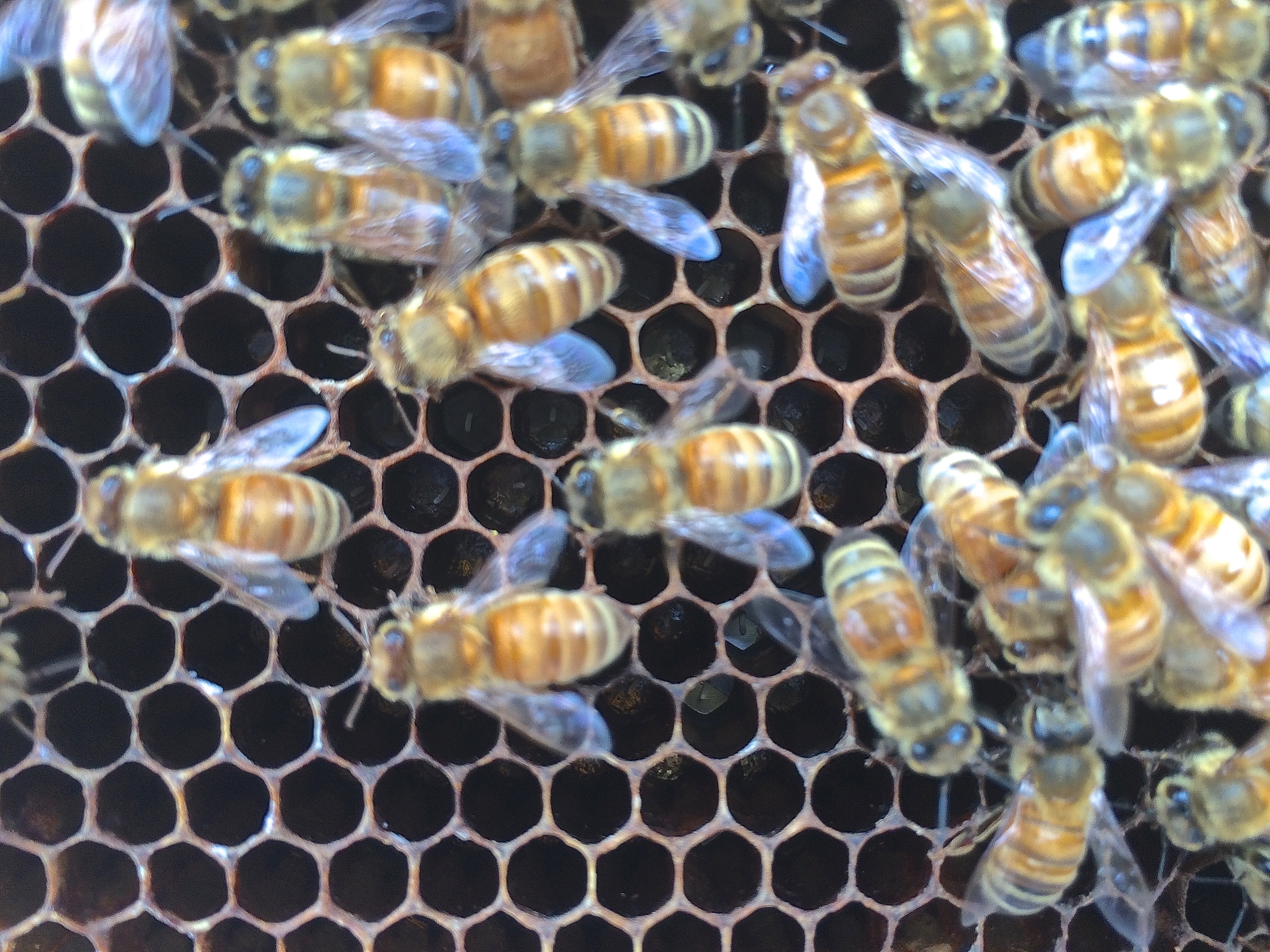
Being that this is Easter season, I went on an egg hunt of sorts today, checking to see if my new queen bee is laying eggs. Huzzah! Look in the cells between the four bees on the left-hand side of this photo. You might need to click on the photo to enlarge it. See some small white pins that look like rice? Bee eggs! Proof Her Majesty is going to work, laying up to 1,500 eggs a day.

When I closed the hives, I spotted a handful of bees fanning their wings madly at the entrance. Bees can flap their wings more than 200 times per SECOND. Watch it on slo-mo video, where you can see the bees bend the tips of their abdomens to expose their Nasanov glands. The gland releases a lemon-scented attraction pheromone that helps foraging bees smell their way home. Think of it as sprinkling lemongrass on your doorstep to ensure that your family members remember which house is theirs.

Now if you smell bananas, you’ve got an entirely different problem. More on that in a later post …

Springing the Queen

queenbee

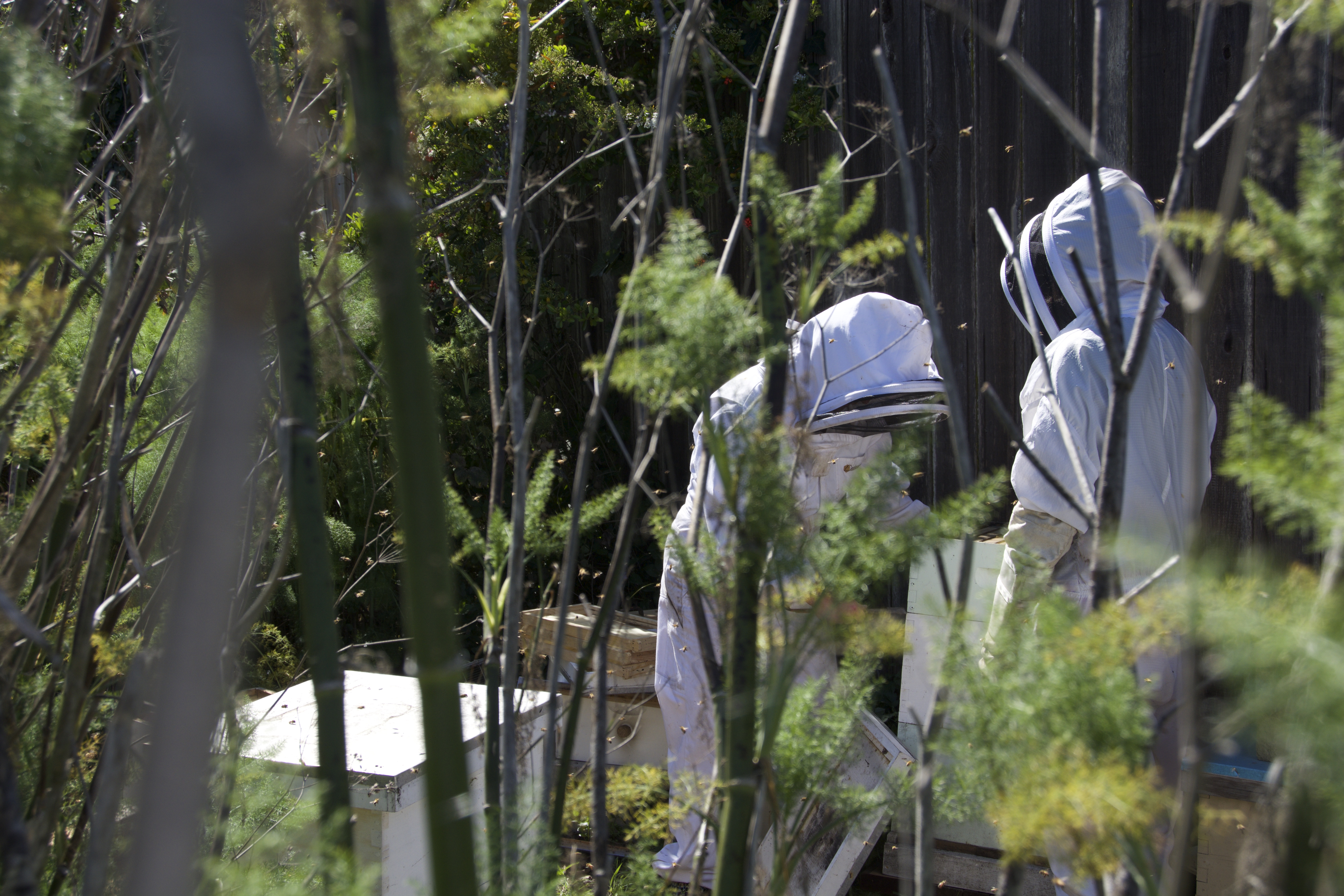
It’s been three days since we installed four new beehives at Little City Gardens in San Francisco – enough time for each colony to start foraging in the tall fennel and blackberry vines and become accustomed to the scent of their new Queen. So we returned to the bee yard to release the Majesties from their confines. Rather than jabbing the cork plug of her cage and pulling to release her, which might unintentionally injure her, we pried open the staple and screen from the side of her cage and let her amble out. Here’s a video of the process; listen closely and toward the end you can hear the Queen “pipe” — make a squeak to announce her arrival. It’s like a bee version of, “Yo!”

DSC_7984

I prefer “controlled release” because you know for sure the queen is healthy and the bees like her before she’s let go. Putting a sugar plug or marshmallow plug in her cage isn’t as secure, because if you show up to an empty cage after the bees chew through the sugar, you’re never certain if they ate through it too fast and killed her, or if she died in the cage and the bees flew off with her to dispose of her far from the hive. You’ll discover it eventually when no eggs appear, but by then you’ve lost precious time to correct the situation.

Next up: We return in five days to look for eggs in the honeycomb. To know The Lady Doth Bear Fruit.

IMG_0762