How Bees Make Wax

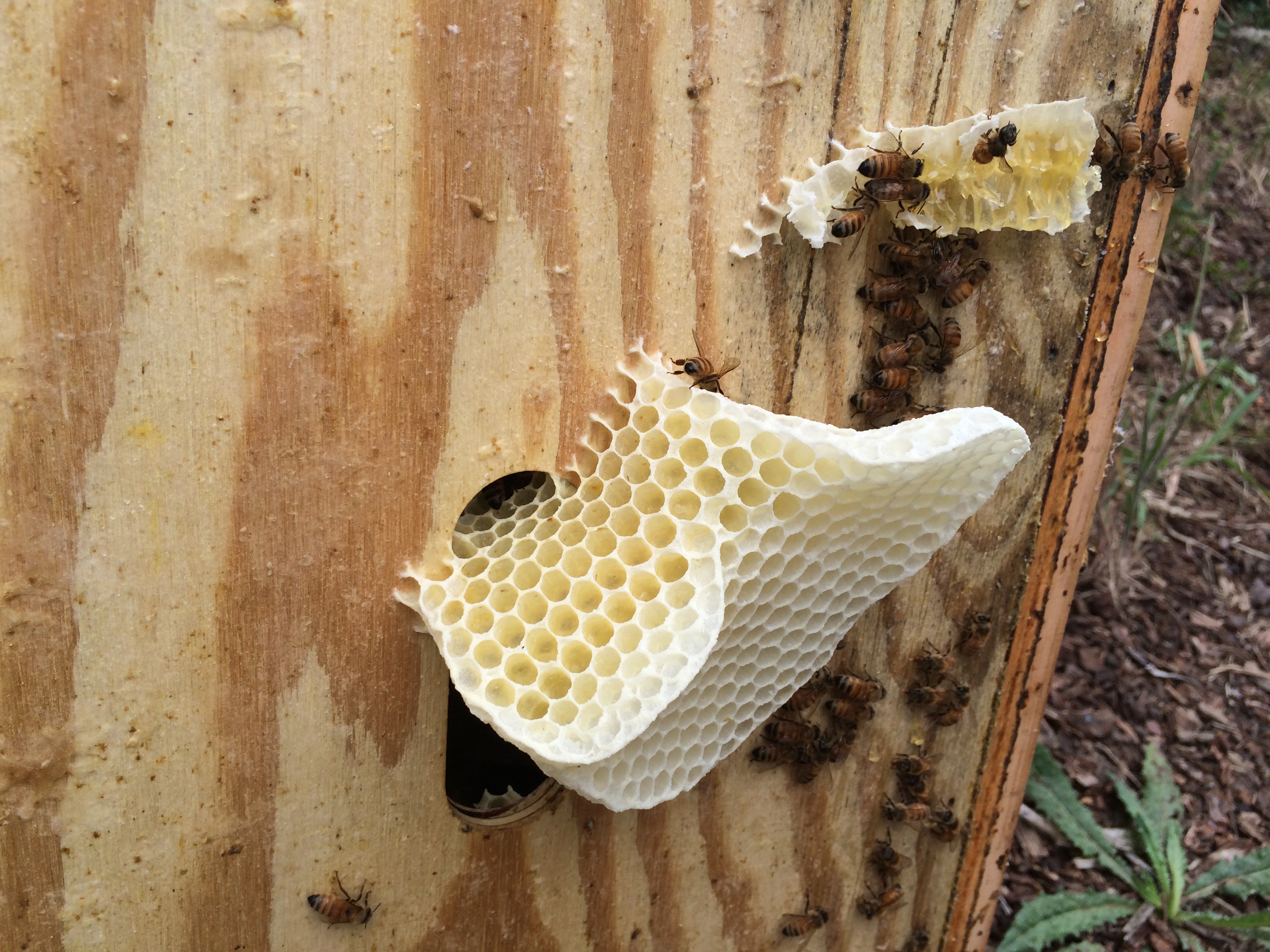
The other day, I opened my hive to discover my bees clinging together like a cluster of grapes, “festooning,” the fancy word for bees making wax. In the hot months I like to put an empty box on top of the hive to help with circulation, but the bees decided they wanted to fill it with honeycomb.

The way bees make wax is fascinating. One of the best explanations is from William Longgood’s “The Queen Must Die” (1985):

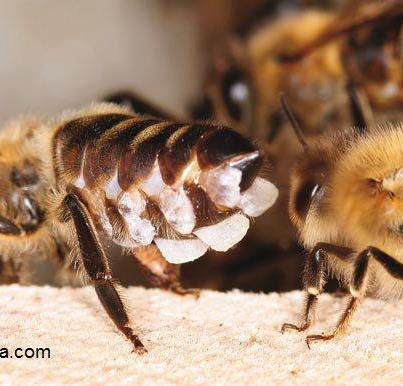
“Usually only young bees are capable of making wax, but, when necessary, older bees can turn the trick, in the same way a retired craftsman can, in an emergency, recapture a former skill. After eighteen to twenty-four hours of clinging together, the temperature climbs to about eighty degrees Fahrenheit and a strange thing happens — tiny wax flakes appear on eight small, pocket-like glands on the abdomens of young bees.
IMG_0345

The bee scrapes off the wax with her forelegs and kneads and chews the secretion in powerful jaws until it is a soft, pliable ball.

She frees herself from the clinging mass and deposits the wax at the base of the sheet of wax foundation with its hexagon imprints. Quickly she moves away, and another bee takes over, perhaps a celebrated architect or artist, who pushes and tugs at the soft wax, drawing it out into the hexagon shape.

Then she, in turn, steps aside and still another craftswoman comes along to draw the cell out farther, each a specialist, it seems, in a different phase of cell building.”
IMG_3271

Relocating a Beehive

IMG_3203

A friend recently told me she wanted to move her beehive across the yard, about 10 feet from its spot.  As incredibly smart as bees are, they can’t find their hive if you move it to a different place in the same bee yard. They will return to the old location, circle in a confused cloud, and perish overnight while their home is sitting, literally, feet away.

So if you want to move your hive, you have to shift it less than a foot a day, to let the bees acclimate, until you have your hive where you want.

OR

You move it miles away.

IMG_3207 (1)

The bees will sense they are in unfamiliar turf, make short exploratory flights until they orient themselves and then settle in to their new zip code.

So, how do you move a live hive of bees?

Carefully. You need ratchet tie-downs to secure the hive boxes. You need to staple mesh over the hive entrance to keep the bees inside during transport. And you should move it either before dawn, before the bees wake, or late after sundown when they have returned from foraging in the sunlight. That way you won’t strand thousands of bees while they are out collecting nectar and pollen.

Put the hive in a truck bed, tie it down again, and drive like there are infinite tomorrows. Make ’em honk!

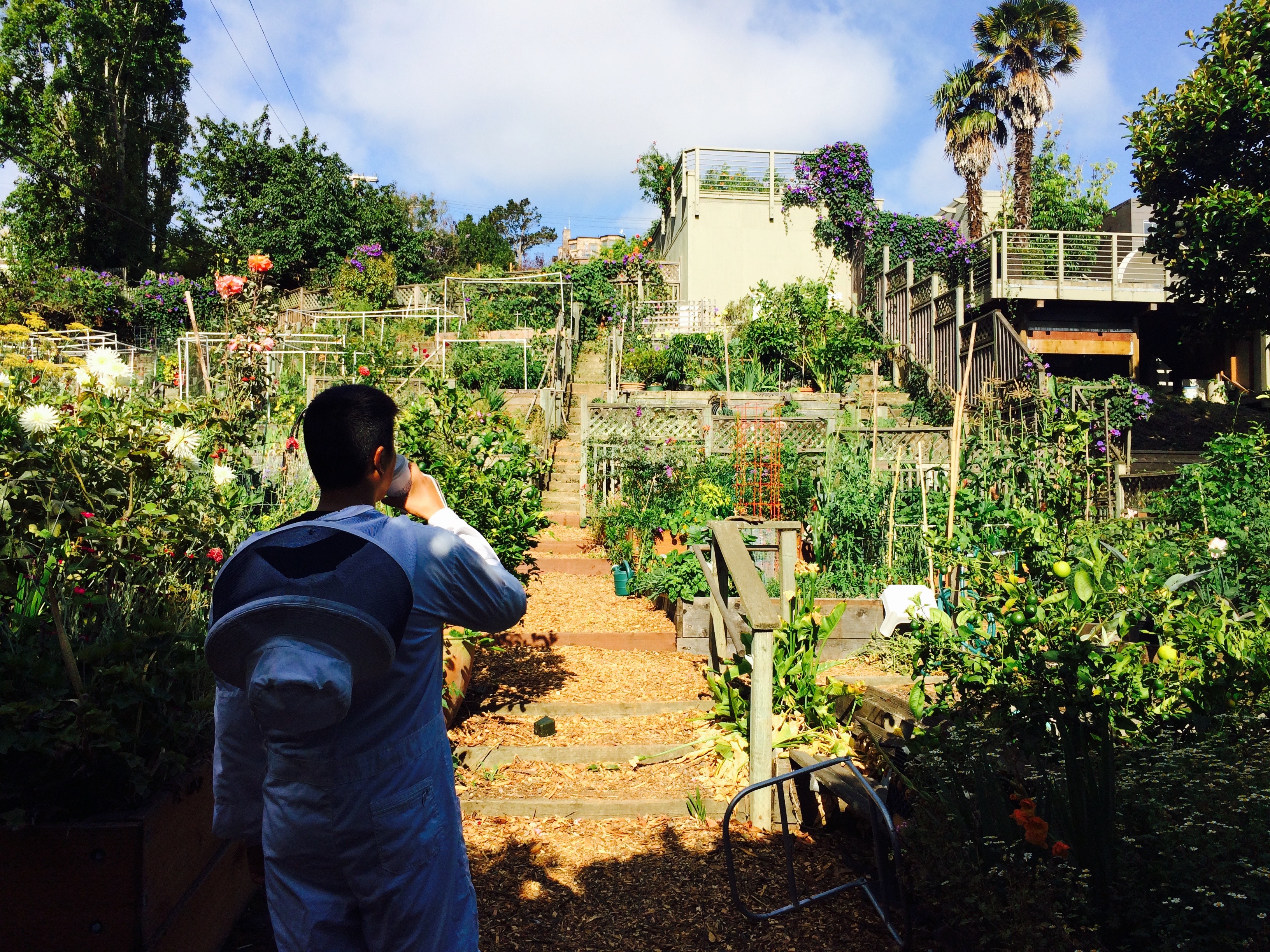
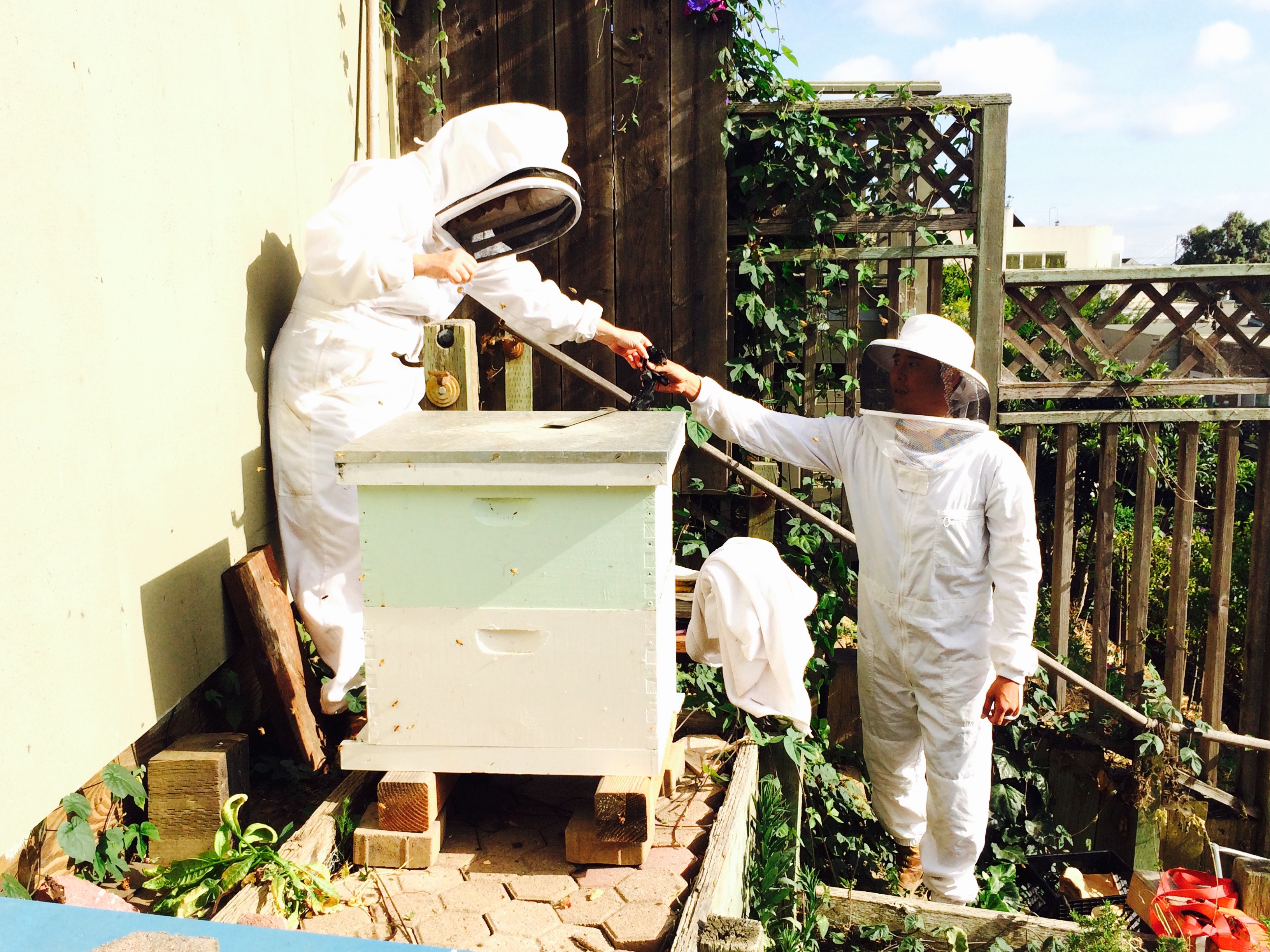
Today some friends and I relocated a hive to Connecticut Friendship Garden in San Francisco’s Potrero Hill neighborhood. Happy to report my bee operation, and my heart, are both expanding.

IMG_3199

Welcome to your new home! Here is video of the bees checking the place out:

Bee Lesson Number Five

Curious what the inside of the hive looks like from a bee’s POV, I put my iPhone at the entrance with the lens facing inward, and pressed video slomo.

What I captured was pure comedy, and another life lesson: When you lose your footing and fall down, inspecially in front of a crowd, there’s nothing you can do but dust yourself off and take another step forward. Like it never even happened.

Bee Lesson Number Three

bee travolta

LISTEN TO THE HIVE MIND

Everyone has heard that bees dance to communicate the sources of flowers and of new homes; but in reality it’s more like a TV dance competition, So You Think You Can Dance, with judges and audience votes.

Groups of bees dance at once, all advocating different locations – and the scout bees take those coordinates and go investigate. Scouts return to the colony and begin dancing with the bee whose proposed location they like the best. Eventually one dancer gathers the most supporters – the largest dance crew – and thus a majority decision is reached about where to forage, and/or where the swarm will relocate.

Bee researchers, led by Cornell University’s Thomas Seeley, have tested the strength of honeybee democracy by offering the colony an array of artificial nesting sites. They tracked the bees and found that the colony always chose the best available home — the one that was the roomiest, driest, and with the most protective entrance high off the ground.

Another bit of bee magic wrapped in a good lesson: Democracy Works.

My Love Letter to the Bees – A Radio Interview

header

The lovely doyenne of San Francisco radio, Janet Gallin, host of the Love Letters Live radio show, opened up her airwaves recently to chat with me about life lessons from the hive. Thanks my friend, as always, it was a blast.

Meredith May SF beekeeper grateful for being raised by the bees

Meredith May SF Beekeeper photo by Matt May

Meredith May, journalist, teacher, SF beekeeper and granddaughter of E. Franklin Peace the beekeeper of Big Sur, is back to talk some more about bees and just in time, too, since there is good news about the much discussed, troublesome and mysterious hive abandonment, more currently known as colony collapse disorder. Meredith is one of those people who can talk about the same subject time and again and always bring something new to the table. The hive, it turns out, is very much like some combination manufacturing factory and royal palace with guards, specific jobs, loyalty to hive, scent of the hive set by the queen and a willingness to sacrifice life for the good of the colony.

Meredith talks about the bees, her girlhood with them, being raised by her grandfather and their adventures in the honeybus, which was the honey factory and, in essence, their own personal hive where she and her grandfather would escape to share times. Interesting to note that it was not until her grandfather had to retire from formal bee-keeping that Meredith felt the urge to keep the bees herself. Because the bees helped her overcome childhood challenges that arose from the negative model of what family life should be, because how they lived their lives taught her what she wanted to be, her love letter is, yes, to the bees. You can read it here and know that her soon to be published book The Honeybus, a bee-keeping memoir beginning with a child’s point of view and extending past muddled personal times to her adulthood, will be the fuller expression of Meredith’s gratitude to her grandfather and to the bees.

A silver lining brightening the cloud of E Franklin Peace’s passing is, of course that Meredith was there with her heart and hand open to receive the baton he was passing to her.