The Queen Lays an Egg

The Queen and her retinue, photo by MaryEllen Kirkpatrick

It’s always fascinating to watch the Queen Bee at work, laying more than 1,000 eggs a day. She’s picky about her nursery, ambling along the honeycomb and inspecting each hexagon cell to make sure it’s clean, air-tight and worthy of her offspring.

She reminds me of a duck nibbling something underwater, sticking her head in the cell so just her butt remains visible. When she finds a space to her liking, she squats and puts her long abdomen inside, lays and egg, and then does a pushup with her long legs to exit.

Watch her lay an egg below. 

The Queen is an egg-laying machine, in constant motion. But I took the few seconds when she was still, laying her egg, to mark her with a small dot of blue paint. This helps me find her more easily during hive inspections, and also helps me know important things, such as whether she has been overthrown. Each year beekeepers use a different color for the Queen. In 2015, her heiness wears royal blue.
Why Bees Smell Like Lemon

IMG_2700

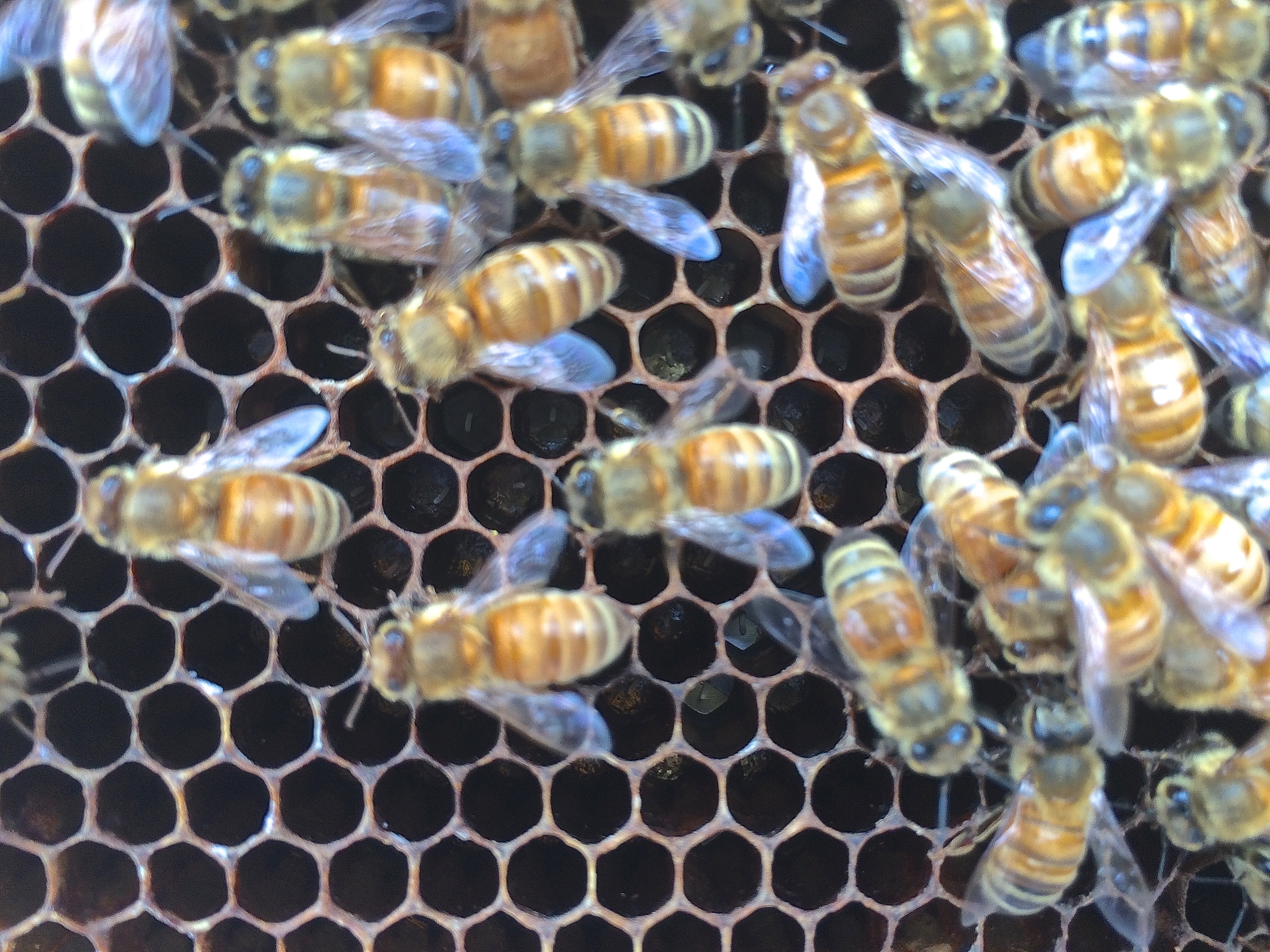
Being that this is Easter season, I went on an egg hunt of sorts today, checking to see if my new queen bee is laying eggs. Huzzah! Look in the cells between the four bees on the left-hand side of this photo. You might need to click on the photo to enlarge it. See some small white pins that look like rice? Bee eggs! Proof Her Majesty is going to work, laying up to 1,500 eggs a day.

When I closed the hives, I spotted a handful of bees fanning their wings madly at the entrance. Bees can flap their wings more than 200 times per SECOND. Watch it on slo-mo video, where you can see the bees bend the tips of their abdomens to expose their Nasanov glands. The gland releases a lemon-scented attraction pheromone that helps foraging bees smell their way home. Think of it as sprinkling lemongrass on your doorstep to ensure that your family members remember which house is theirs.

Now if you smell bananas, you’ve got an entirely different problem. More on that in a later post …

Stringing Beehive Frames, Grandpa-Style

IMG_0063 IMG_0064

On a recent visit to Grandpa’s house in Carmel Valley, he gave me his handmade frame stringer. Before laying wax foundation into empty beehive frames, you must strengthen them first by putting horizontal wiring inside the wooden frames.

FullSizeRender 6

This helps steady the wax sheets so the bees can make orderly honeycomb from it, and wires also keep the honeycomb from falling apart in the spinner at harvest time. I wasn’t sure how his gizmo worked, but I think I got it. I was able to string frames so tightly that I could play them like guitar strings. Watch and tell me if I did it correctly.