Listen inside a beehive

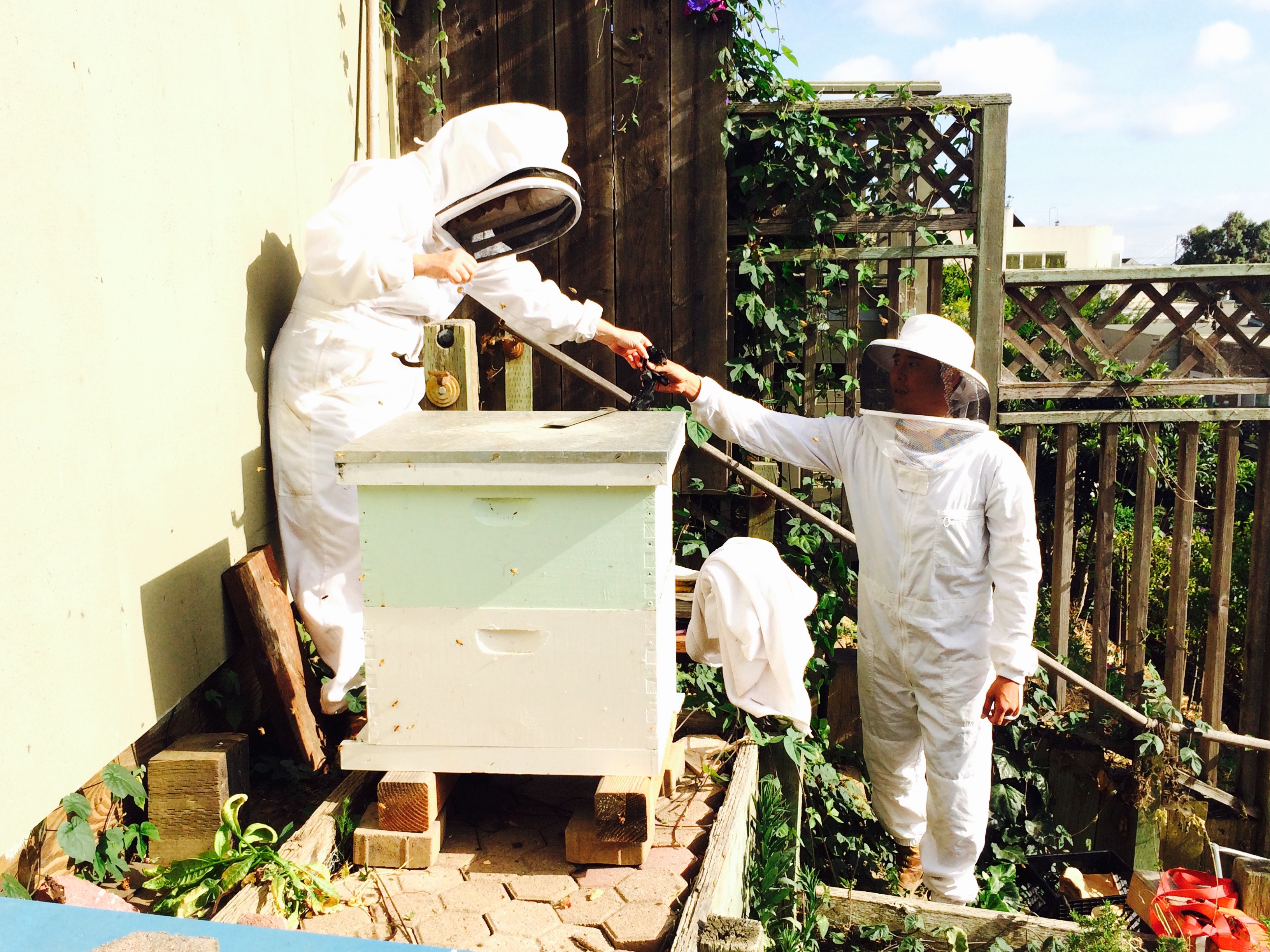
DSC_1665Decades ago, my friend Aerial Gilbert (right) was a beekeeper. She loved the sight, smell and feel of bees in her hands – like any crazy beekeeper will try to convince you is a magical thing.

When Aerial lost her sight, she had to forego some things – only a few – for safety. After living with bees for eighteen years, she tearfully gave her hives away. But now, she’s ready for a comeback. She joined the Sonoma County Beekeepers Association and got a beekeeper buddy to help her.

She’s wearing the white suit again, and overjoyed with two new hives in her backyard.

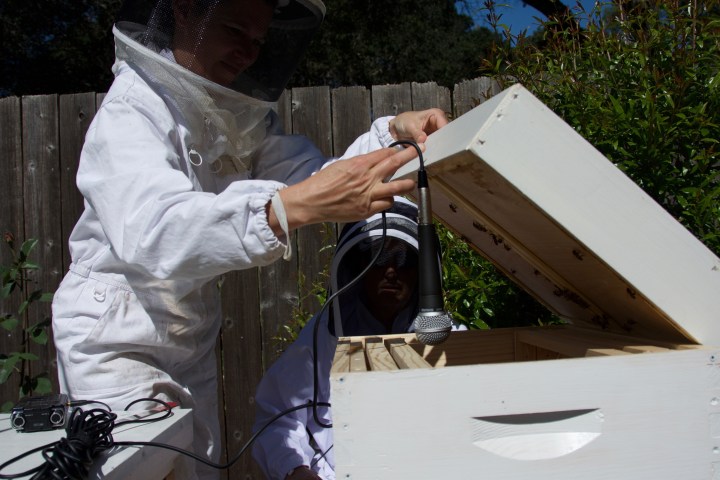
When she told me she listens to her hive with a stethoscope, I got an idea. I have some professional sound recording equipment. Why not drop a mic in and find out what it sounds like in there?
DSC_1634

And that we did. We heard the ping of bees landing on the wire mesh bottom screen. We heard fanning that sounded like a jet fighter. And we heard the hum of a super-organism, a collective happy sound that all is good in the family. Take a listen yourself.

DSC_1606 DSC_1657

We plan to keep testing with different microphones, so stay tuned for sound updates on this blog.
Leaving Home, from a Bee’s POV

Pardon the vertical video – it was the best way to capture my bees coming in for a landing in slomo. With the sunlight behind them, you can see their bellies full of nectar. All four of my hives are thriving, and I’m happy to report that Grandpa’s hive has doubled in size since I put it in the back yard two months ago.

A Tour Inside Grandpa’s Honey Bus

Here’s Grandpa, the man who taught me beekeeping when I was five, touring the inside of his World War II Army Bus – turned honey factory in his Carmel Valley backyard. He expounds on honey harvesting, why the bees are disappearing, and the proper way to remove a stinger.

This is one of the last videos I took of him before he passed away earlier this year. Note he wears no gloves when he sticks his hands in a hive!

How Bees Make Wax

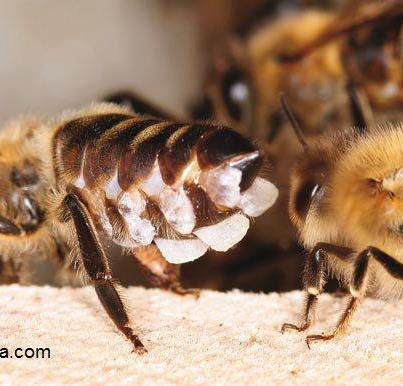
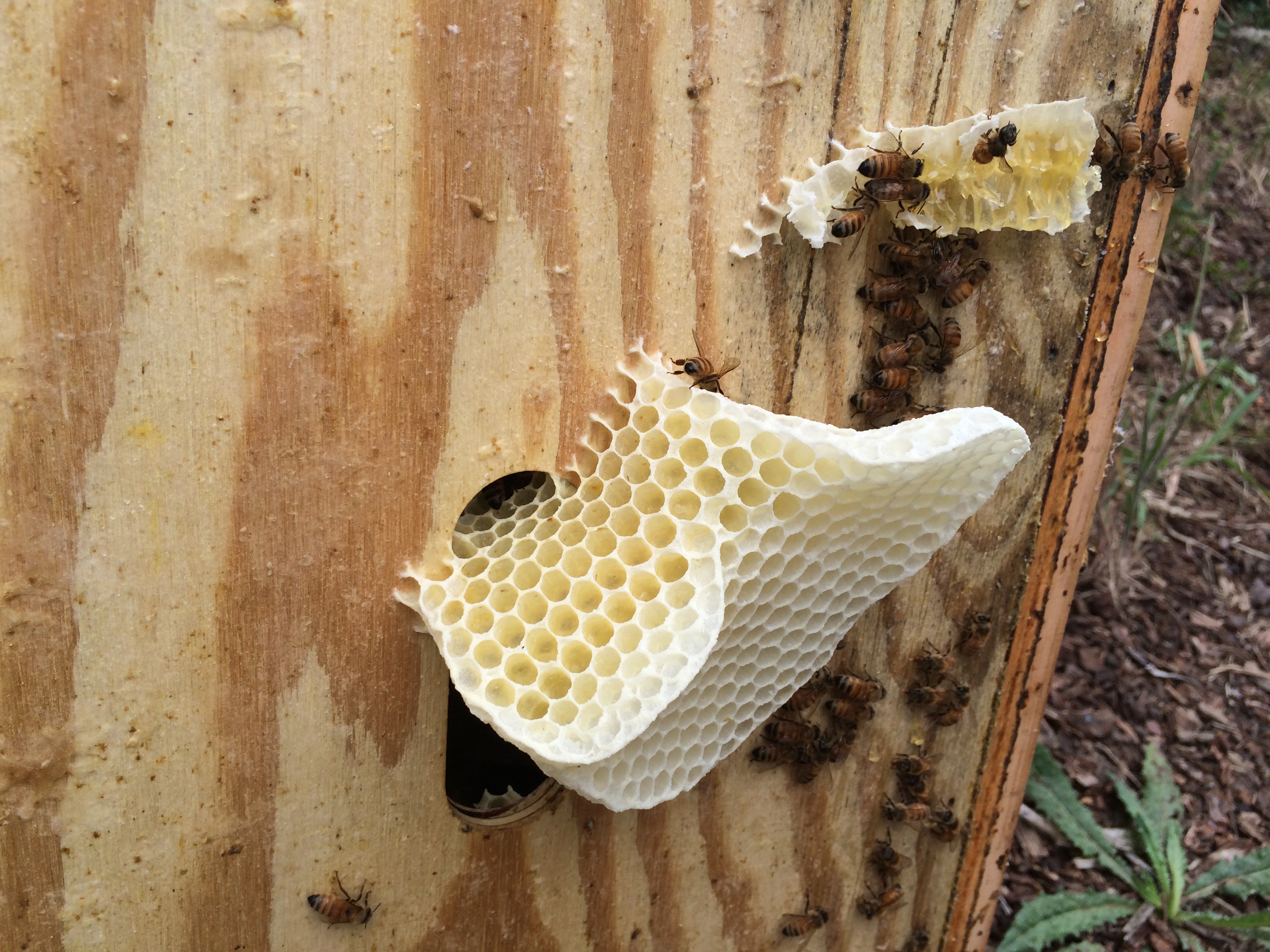
The other day, I opened my hive to discover my bees clinging together like a cluster of grapes, “festooning,” the fancy word for bees making wax. In the hot months I like to put an empty box on top of the hive to help with circulation, but the bees decided they wanted to fill it with honeycomb.

The way bees make wax is fascinating. One of the best explanations is from William Longgood’s “The Queen Must Die” (1985):

“Usually only young bees are capable of making wax, but, when necessary, older bees can turn the trick, in the same way a retired craftsman can, in an emergency, recapture a former skill. After eighteen to twenty-four hours of clinging together, the temperature climbs to about eighty degrees Fahrenheit and a strange thing happens — tiny wax flakes appear on eight small, pocket-like glands on the abdomens of young bees.

IMG_0345

The bee scrapes off the wax with her forelegs and kneads and chews the secretion in powerful jaws until it is a soft, pliable ball.

She frees herself from the clinging mass and deposits the wax at the base of the sheet of wax foundation with its hexagon imprints. Quickly she moves away, and another bee takes over, perhaps a celebrated architect or artist, who pushes and tugs at the soft wax, drawing it out into the hexagon shape.

Then she, in turn, steps aside and still another craftswoman comes along to draw the cell out farther, each a specialist, it seems, in a different phase of cell building.”

IMG_3271

Relocating a Beehive

IMG_3203

A friend recently told me she wanted to move her beehive across the yard, about 10 feet from its spot.  As incredibly smart as bees are, they can’t find their hive if you move it to a different place in the same bee yard. They will return to the old location, circle in a confused cloud, and perish overnight while their home is sitting, literally, feet away.

So if you want to move your hive, you have to shift it less than a foot a day, to let the bees acclimate, until you have your hive where you want.

OR

You move it miles away.

IMG_3207 (1)

The bees will sense they are in unfamiliar turf, make short exploratory flights until they orient themselves and then settle in to their new zip code.

So, how do you move a live hive of bees?

Carefully. You need ratchet tie-downs to secure the hive boxes. You need to staple mesh over the hive entrance to keep the bees inside during transport. And you should move it either before dawn, before the bees wake, or late after sundown when they have returned from foraging in the sunlight. That way you won’t strand thousands of bees while they are out collecting nectar and pollen.

Put the hive in a truck bed, tie it down again, and drive like there are infinite tomorrows. Make ’em honk!

Today some friends and I relocated a hive to Connecticut Friendship Garden in San Francisco’s Potrero Hill neighborhood. Happy to report my bee operation, and my heart, are both expanding.

IMG_3199

Welcome to your new home! Here is video of the bees checking the place out: